
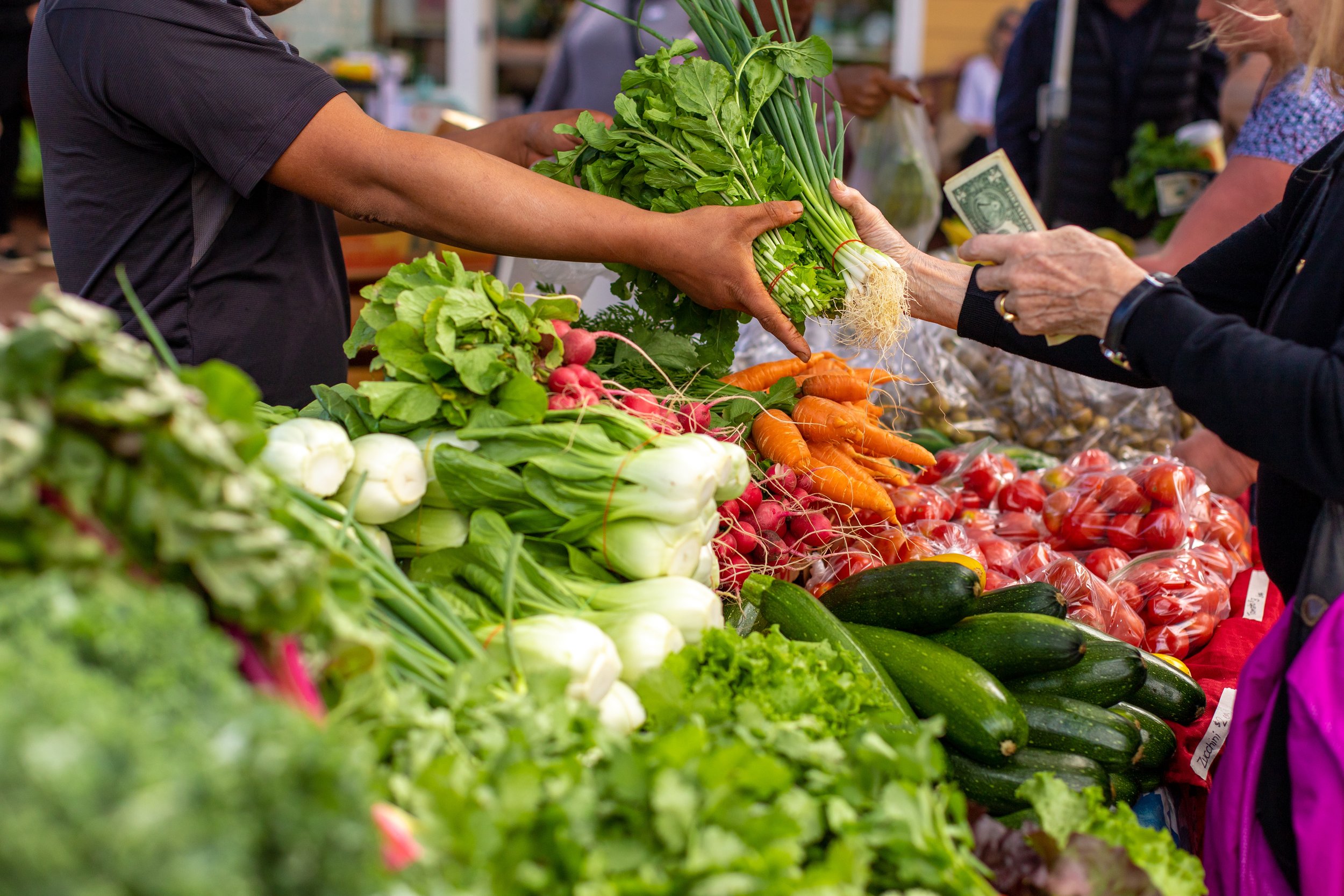
Fund our emergency food system, support our local farmers!
Farm to Families is an initiative to strengthen Hawaiʻi’s emergency food system by connecting local farmers with families in need.

During disasters or economic crises, food banks play a critical role in feeding communities — yet they rely heavily on private donations and grants, even as government agencies depend on them to respond.
By investing in locally grown food for distribution to households facing hardship, Farm to Families improves access to fresh, nutritious meals while supporting Hawaiʻi farmers. This connection between agriculture and food assistance builds resilience for both families and farmers in times of crisis.
In 2025, Hawaiʻi’s State Legislature appropriated $500,000 per year for two years for Farm to Families—a small start, with big promise.
During the 2026 legislative session, HHAN advocated for additional funding for the Farm to Families program. While the bill (HB2208) did not pass, an additional $898,000 was included in the budget ↓
HB1800 - “FARM TO FOODBANK PROGRAM”
Allocates $898,000 for FY27 through the Office of Community Services for the Farm to Families program, allowing for food banks to purchase a total of $1.4 million worth of 100% locally grown food.
How Local Food Banks Put Farm to Families into Action



Each county food bank plays a vital role in Farm to Families. Explore highlights and resources from across the islands to see how local programs are connecting farmers and families.
Hawai‘i Island
The Food Basket
The Food Basket, Hawai‘i Island’s food bank is at the forefront of Farm to Family initiatives, pioneering efforts to connect local farmers with communities in need. Through innovative programs, they ensure that fresh, locally grown food reaches keiki, kūpuna, and families facing food insecurity. As Hawai‘i Island’s primary food bank, The Food Basket partners with over 100 partner agencies to provide emergency food assistance or other direct services to those in need.
DA BOX Community Supported Agriculture (CSA) program: Aggregates fresh locally grown produce from Hawai'i Island farms and distributes to customers islandwide.
Kōkua Harvest program: Staff and volunteers harvest produce on Hawai'i Island that would otherwise go to waste and distribute it to families in need.
DA BUX program: Double Up Food Bucks provides a 50% discount on Hawai’i grown produce for SNAP beneficiaries at over 100 retail sites statewide.
Maui County
Maui Food Bank
Maui Food Bank is Maui County’s primary safety net for hunger relief. The Food Bank provides safe and nutritious food to anyone in Maui County who is at risk of going hungry. Of those served, 40% are children and youth. Working with more than 100 distribution partners and programs, the Food Bank distributes safe and nutritious food to individuals, families, kids, the working poor, seniors on fixed incomes, the homeless and anyone who is at risk of going hungry. This includes people in need living in the rural communities of Hana, Moloka‘i and Lana‘i.
Fresh 4 All program: Maui Food Bank purchases and picks up donated fresh produce from 41 local Maui farming partners for distribution to those in need.
‘Ai Holo Summer Feeding Program: Works with 15 local farmers and suppliers to deliver fresh nutritious food to children from low-income families in rural areas like Hana, Moloka‘i and Lāna‘i.
Oʻahu
Hawaiʻi Foodbank
Hawai‘i Foodbank works with a network of more than 250 hunger relief partners on O‘ahu and Kaua‘i, along with affiliate food banks on the other islands, to provide food assistance to communities across the State of Hawai‘i. Hawai‘i Foodbank works collaboratively with its partners to source and distribute food through a variety of nourishment programs, including those focused on serving Hawai‘i’s most vulnerable populations: its keiki and kūpuna.
Farm to Families program: Working with 30+ farmers and food hub partners statewide, provides fresh, healthy, Hawaiʻi-grown food to those facing hunger while supporting hundreds of local growers & producers.
Senior Farmers’ Market Nutrition program: Offers low-income kūpuna $50 worth of coupons to obtain eligible foods without charge from participating farmers, farmers’ markets and roadside stands.
Kauaʻi
Hawaiʻi Foodbank, Kauaʻi Branch
Hunger on Kaua‘i continues to persist at some of its highest levels in the last century. Inflation and rising food prices have exacerbated hunger on the Garden Island. As a result, 1 in 4 Kaua‘i households currently face food insecurity. Hawai‘i Foodbank Kaua‘i works collaboratively with a network of more than 40 agency partners to source and distribute food through a variety of nourishment programs, including those focused on serving Hawai‘i’s most vulnerable populations: its keiki and kūpuna.
Farm to Families program: Provides fresh, healthy, Hawaiʻi-grown food to those facing hunger while supporting local farmers and producers. Works with 11 local farms partners to distribute culturally important foods such as poi, ‘uala, and ‘ulu, to the community.
Senior Farmers’ Market Nutrition program: Offers eligible seniors $50 worth of coupons to obtain eligible foods without charge from participating farmers, farmers’ markets and roadside stands. Provides low-income kūpuna with access to nutritious, locally-grown fruits, vegetables, honey and herbs.
In the News


Legislative Session 2025 Resources
-
The partnership between local farms and food organizations benefits families in our communities and our economy by:
Strengthening Hawaiʻi’s Food Supply Chain
By investing in local agriculture, we reduce our dependence on imported goods, creating a more resilient and sustainable food system for Hawaiʻi.
Establishing a strong food system in blue skies sets up essential community partners that are needed in the wake of disaster whether it is a pandemic, a government shutdown, a hurricane, flood, wildfires, or just day-to-day emergency need.
Supporting Local Farmers
The bill offers a direct benefit to Hawaiʻi’s agricultural sector, providing a steady and fair market for local produce.
This will boost our agricultural economy and strengthen local supply chains.
Farmers can plan for future growth knowing their products will feed their neighbors in need.
Enhancing Nutritional Access
Fresh, local produce provides essential nutrients to individuals and families who may otherwise lack access to healthy food options.
Our community is able to access culturally-significant foods that are locally grown, which they wouldn’t likely receive without local farmers.
This not only fights hunger but also promotes long-term health and wellness in our communities.
-
RE: Support for [Bill no.], [Bill description]
Dear [Chair and Vice chair],
My name is [name] and I am [position] of [organization/school/company].
I am writing with an urgent request for your support of the "Farm to Families" bill, a pivotal piece of legislation that has the potential to transform our state’s food security landscape. This bill will allow food distributing organizations to strengthen their partnerships with local farmers and food producers, ensuring that fresh, locally grown produce reaches families facing food insecurity.
The partnership between local farms and food organizations benefits families in our communities and our economy by:
Strengthening Hawaiʻi’s Food Supply Chain: By investing in local agriculture, we reduce our dependence on imported goods, creating a more resilient and sustainable food system for Hawaiʻi.
Supporting Local Farmers: The bill offers a direct benefit to Hawaiʻi’s agricultural sector, providing a steady and fair market for local produce. Farmers can plan for future growth knowing their products will feed their neighbors in need.
Enhancing Nutritional Access: Fresh, local produce provides essential nutrients to individuals and families who may otherwise lack access to healthy food options. This not only fights hunger but also promotes long-term health and wellness in our communities.
[If you have a STORY about why ending hunger in Hawaiʻi is important to you, insert it here.]
Thank you for your leadership and commitment to our shared vision of a thriving, food-secure Hawaiʻi. I am deeply grateful for your consideration of this important legislation.
-
"One in three households in Hawaiʻi face food insecurity, and our most vulnerable populations need our support. This bill highlights the House Majority's commitment to supporting Hawaiʻi-grown food and providing nutritious options for local families, while empowering Hawaiʻi's farmers. When we invest in local agriculture, we boost our economy, create sustainable opportunities, and mālama ʻāina—steward our land to preserve it for future generations. By nourishing our keiki and families, we strengthen and uplift our entire community”
— House Committee on Agriculture & Food Systems Chair Kirstin Kahaloa (D-6, Hōnaunau, Nāpō‘opo‘o, Captain Cook, Kealakekua, Keauhou, Hōlualoa, Kailua-Kona)
Now, more than ever, investing in local food systems through programs like Farm to Families is a necessary strategy to build Hawaiʻi’s economic resilience and reduce food insecurity.